01
Tap to listen
One tap. A voice.
My Voice
01
Can't say it
Need. Pain. Distress.
02
Can't use it
Screens. Gestures. Setup.
03
Can't reach it
Cost. Phones. Dependency.
Millions with autism and speech impairments face daily barriers to being understood when it matters most.
The solution
A small device, built for that gap.
01
Tap to listen
One tap. A voice.
02
Sound, then meaning
Their cue. Spoken back.
03
Stands alone
No phone. No app.
04
Made to reach
Simple. Local. Affordable.
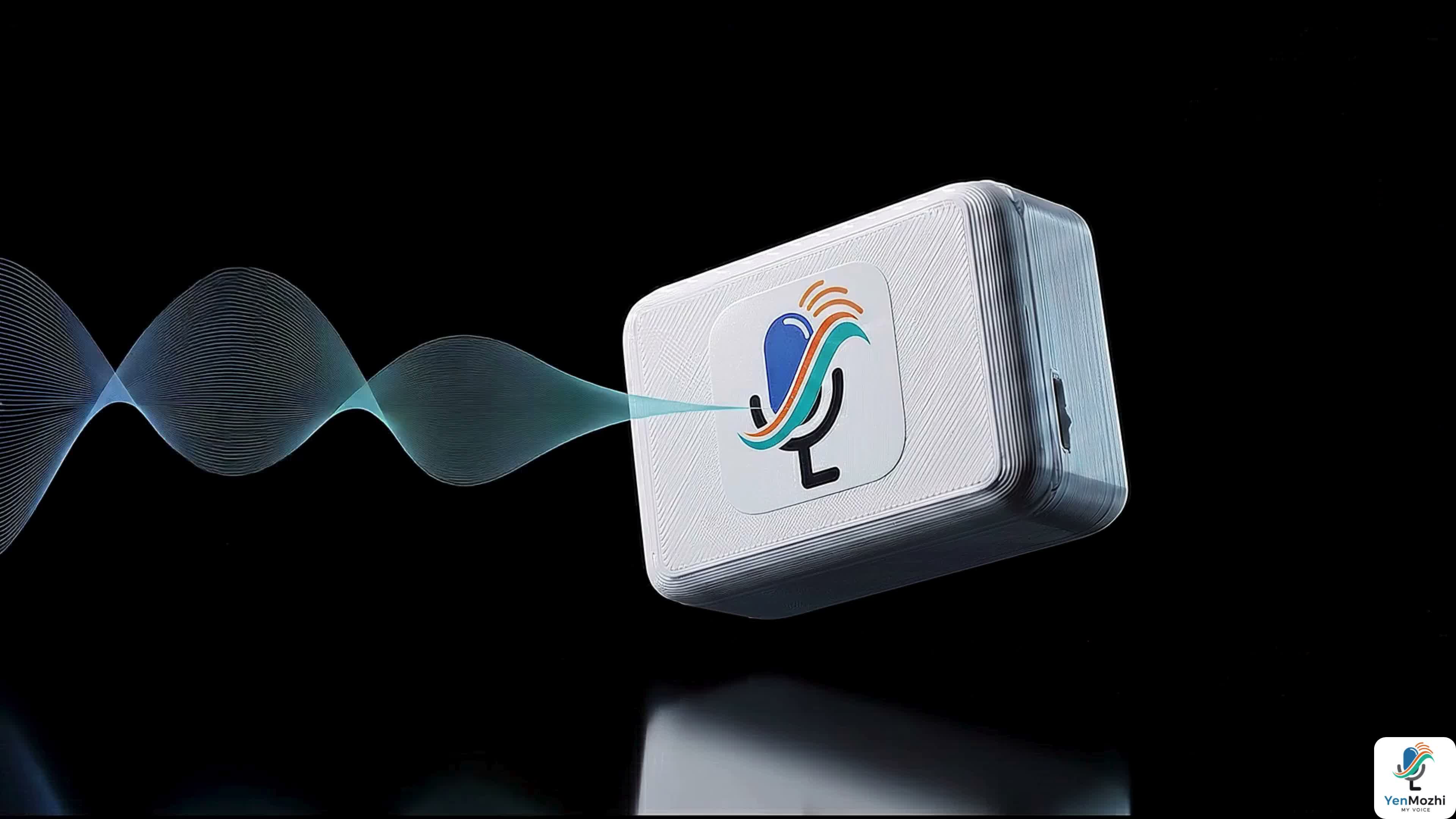
A sound in.
A voice out.
How it works
01
Tap to listen. One tap starts it.
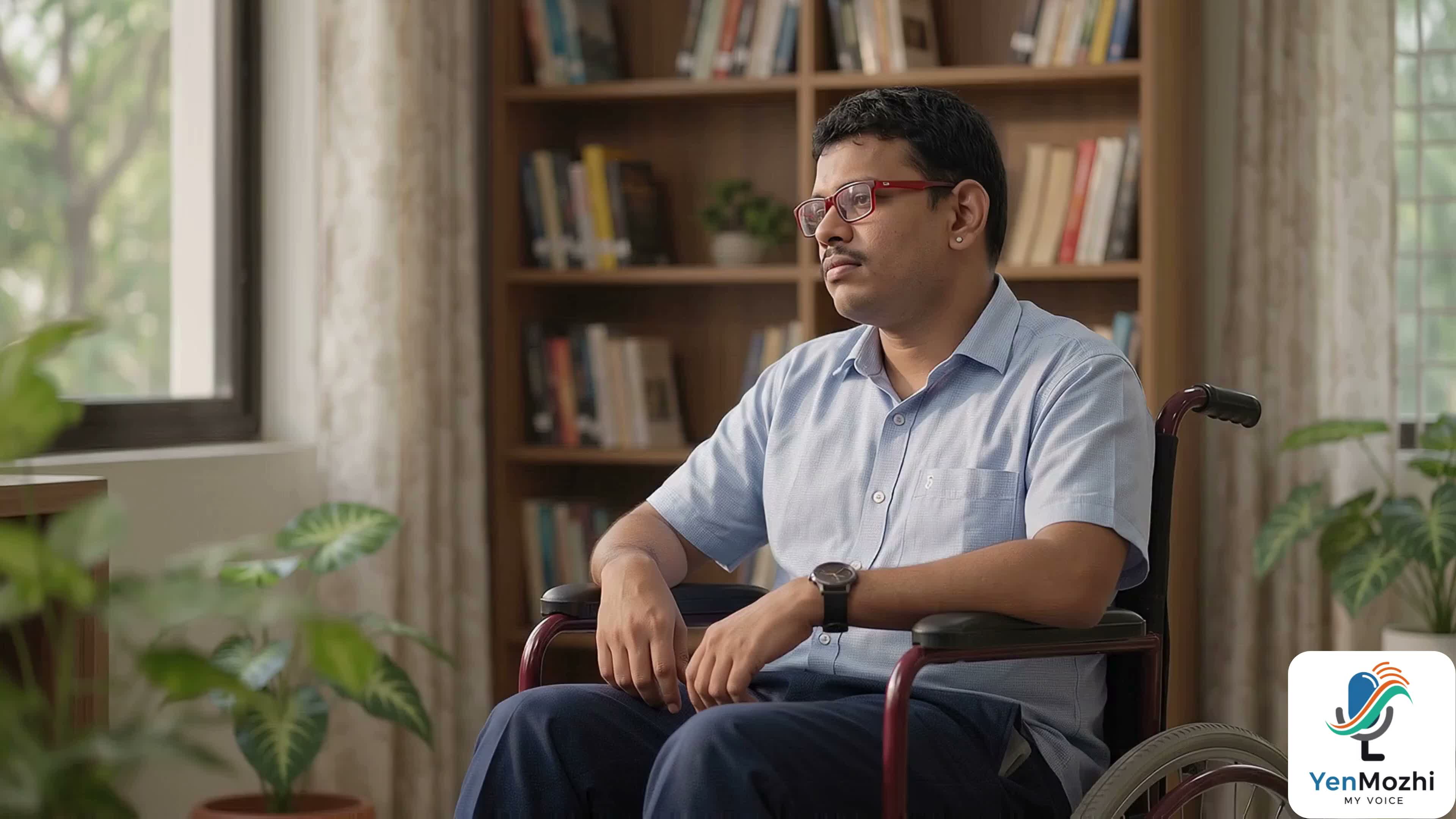
He is here.
Someone beside him.
Close. In a pocket.
One tap.
A voice.
A smile.
Their sound, spoken back — so the room can answer.
Who it is for
01
Them
Autism. Speech that is hard to use.
02
Family
Meaning at home, when it matters.
03
School
A way to be heard in class.
04
Care
Another channel. Not a replacement.
01
Them
Autism. Speech that is hard to use.
Field
Why it stands alone
01
One tap. No buttons.
No menus. No keys to learn. A tap starts it, a tap ends it.
02
Compact
Small enough for a pocket. Meant to stay with the person.
03
In development
Offline
Core listen and speak are being built to work without the cloud.
04
Emergency
When need or distress cannot wait, a cue can still become a voice.
05
Affordable
Made to reach, not to sit behind a high price.
06
In development
No app
No phone. No software to install. The device is the product.
Recognition
YenMozhi has been recognized at national, state, and institutional forums — among 12+ district and state awards.
Field recordings
Natural cues recorded during field visits, and used to train the first working model.
Water
I need water.
தண்ணி வேணும்
Mother
Call mom.
அம்மா வா கூப்பிடுங்க
Bathroom
I need to go to the bathroom.
குளியலறைக்கு போகணும்
Pain
My hand hurts.
கை வலிக்குது
Live prototype
The same field cues, in the browser. Make a sound. Hear the phrase spoken back.